
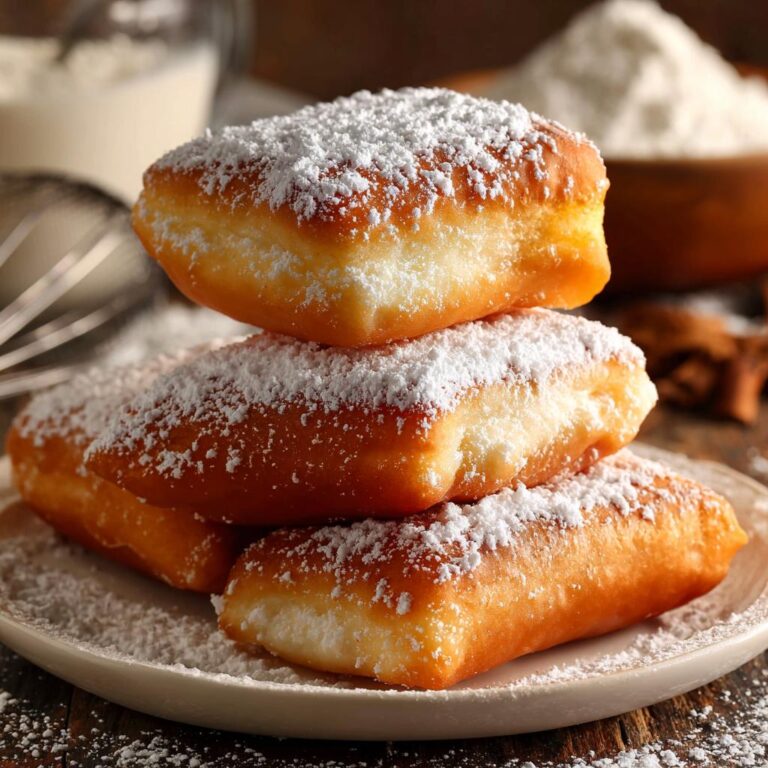
There’s nothing quite like biting into a warm Vanilla French Beignet—clouds of powdered sugar exploding everywhere, the crisp golden exterior giving way to a tender, fluffy center. I fell in love with these pillowy delights years ago at Café du Monde in New Orleans, where the scent of fried dough and chicory coffee lingers in the air like a sweet promise. Now, I make them at home whenever I need a little taste of that magic. With just a handful of pantry staples and a bit of patience (okay, mostly excitement), you can recreate this classic French breakfast pastry too. Trust me, once you try homemade beignets, there’s no going back.
Why You’ll Love These Vanilla French Beignets
I can already tell these beignets will become your new obsession—here’s why:
- Pillowy perfection: That first bite? Pure magic. The exterior gets just crisp enough, while the inside stays impossibly light and airy—like biting into a sweet cloud.
- Faster than you think: No fancy techniques here! The dough comes together in minutes (hello, one-bowl wonder), and most of the “work” is just waiting for it to rise.
- Breakfast (or dessert!) hero: Serve them warm with coffee, and suddenly you’re at a Parisian café—even if you’re still in pajamas.
- Vanilla’s secret power: That teaspoon of extract might seem small, but it transforms the whole batch into something special—fragrant, comforting, and just sweet enough.
- Powdered sugar drama: Let’s be honest—half the fun is the blizzard of sugar that coats your fingers, nose, and probably your shirt. Worth every crumb.
Seriously, these disappear faster than I can fry them. Consider yourself warned!
The Exact Ingredients You’ll Need (And Why They Matter)
Here’s the beautiful thing about beignets—they’re simple, but every ingredient plays a starring role. I’ve made these enough times to know exactly what works (and learned the hard way when substitutions go wrong). Gather these:
- 2 ¼ tsp active dry yeast: The magic starter! Look for fresh packets—if yours doesn’t foam, your beignets won’t rise properly.
- ¾ cup warm milk (110°F): Use a thermometer! Too hot kills yeast; too cold won’t wake it up. Whole milk gives the richest texture.
- ¼ cup granulated sugar: Just enough to sweeten the dough without overpowering the vanilla.
- 1 large egg, room temp: Cold eggs can shock the yeast. I let mine sit in warm water for 5 minutes if I forget to take it out ahead of time.
- 1 tsp pure vanilla extract: No imitation stuff here! The real deal adds that warm, floral depth. (Sometimes I sneak in an extra ½ tsp—shh.)
- 2 ½ cups all-purpose flour (spooned & leveled): Spoon flour into your measuring cup—don’t scoop! Packed flour leads to dense beignets.
- 2 tbsp unsalted butter, melted: Adds richness and helps create that tender crumb. Salted butter works in a pinch, but reduce added salt slightly.
- ½ tsp salt: Balances the sweetness and enhances flavor. I use fine sea salt.
- Oil for frying: Neutral oils like vegetable or canola work best. Peanut oil adds a nice depth if you have it!
- 1 cup powdered sugar: For the essential snowy finish. Sift it to avoid lumps—you’ll thank me later.
Pro tip: Measure everything before starting! Yeast waits for no one, and you’ll want to move fast once it’s activated. (Ask me how I know…)
Equipment You’ll Need
Don’t worry—you don’t need fancy gadgets to make these Vanilla French Beignets! Just grab these basics (you probably have most already):
- Heavy-bottomed pot: My trusty Dutch oven works best—it holds heat evenly so your oil stays at that perfect 350°F. A deep skillet works too!
- Deep-fry thermometer: Non-negotiable. Guessing the oil temp leads to greasy or burnt beignets. Clip it to the pot’s side and watch like a hawk.
- Rolling pin: For getting that dough to a dreamy ½-inch thickness. No rolling pin? A wine bottle works surprisingly well (just wash it first!).
- Slotted spoon or spider strainer: To safely flip and rescue those golden beauties from the oil. Tongs can tear the delicate dough.
- Mixing bowls: One large one for the dough, plus a smaller one for activating the yeast. Glass or stainless steel—plastic can hold odors.
- Paper towel-lined tray: For draining excess oil. I use a cooling rack set over baking sheets for extra crispiness.
That’s it! No stand mixer needed—this dough comes together beautifully with just a wooden spoon and some elbow grease. Now let’s get frying!
How to Make Vanilla French Beignets
Okay, let’s get to the fun part—turning those simple ingredients into golden, sugar-dusted perfection! Follow these steps closely, and you’ll have beignets so good, they’ll rival any café’s. I’ve made every mistake possible (burnt, dense, undercooked—you name it), so trust my hard-won wisdom!
Activating the Yeast
First things first—wake up that yeast! In a small bowl, combine your warm milk (110°F—use that thermometer!), yeast, and a pinch of sugar. Give it a quick stir, then walk away for 5-10 minutes. When you come superhero cape (just kidding!).
Cutting and Frying the Beignets
Now for the magic! Lightly flour your surface and roll the dough to ½-inch thickness—no thinner, or they’ll be crunchy little hockey pucks. Cut into 2-inch squares (a pizza cutter works great here).
Heat your oil to 350°F—maintaining this temp is crucial. Fry in small batches (3-4 at a time) for 1-2 minutes per side until they’re gloriously golden. They’ll puff up like little pillows! Drain on paper towels for 30 seconds—just long enough to toss them in powdered sugar while still warm.
Pro tip: Keep unfried dough covered so it doesn’t dry out. And resist the urge to press down on frying beignets—let them float and puff naturally!
Pro Tips for Perfect Vanilla French Beignets
After years of trial and error (and more than a few beignet casualties), I’ve nailed down the secrets to foolproof Vanilla French Beignets every time. Save yourself the heartache—here’s what really matters:
- Yeast is alive—or it’s dead: If your milk-yeast mixture doesn’t foam within 10 minutes, start over. No foam = no rise = sad, dense beignets.
- Oil temp is king: 350°F is the sweet spot. Too hot? Burnt outsides, raw insides. Too cool? Greasy sponges. Keep that thermometer clipped and adjust heat as needed.
- Don’t crowd the pan! Adding too many at once drops the oil temp fast. I do 3-4 per batch max—patience rewards you with perfectly puffed beignets.
- The dough knows best: If it springs back slowly when poked, it’s ready. If it collapses, you’ve overproofed—just reshape and give it less time next round.
- Powdered sugar timing: Dust them the second they’re cool enough to handle. Waiting lets the sugar melt into weird sticky patches (still tasty, but less pretty).
- Fresh is everything: These are best eaten within an hour of frying. Day-olds? Revive in a 350°F oven for 5 minutes—they’ll never be quite as heavenly, but close!
Bonus trick: Keep a small bowl of water nearby when cutting dough—dip your fingers in to prevent sticking without adding too much extra flour to the dough. Works like a charm!
Serving and Storing Vanilla French Beignets
Here’s the truth—these beignets are at their absolute best eaten within minutes of frying, when they’re still warm enough to melt the powdered sugar into little crystalline rivers. I always set up a mini “beignet station” right by the stove: freshly fried batches go straight onto a tray, get buried under a blizzard of powdered sugar (use that sifter—trust me!), and disappear instantly into waiting hands.
For serving:
- Go classic: Pile them high on a plate with strong café au lait—the bitter coffee cuts through all that sweetness perfectly.
- Extra vanilla love: Sometimes I’ll mix a teaspoon of vanilla extract into the powdered sugar for an aromatic twist.
- Fruit on the side: Fresh berries or sliced bananas balance the richness if you’re serving these as dessert.
Storing leftovers (if any!):
- Same-day magic: Keep them in a single layer in an airtight container at room temp for up to 8 hours. The sugar will melt, but they’ll still taste delicious.
- Next-day revival: Stale beignets? Pop them in a 350°F oven for 5 minutes to re-crisp, then re-dust with sugar.
- Freezer trick: Freeze unfried dough squares between parchment paper for up to a month. Fry straight from frozen—just add an extra 30 seconds per side.
Pro tip: If you’re serving a crowd, fry batches continuously but keep the finished ones warm in a 200°F oven. Just wait to sugar them until right before serving—otherwise you’ll end up with a sticky mess (and possibly powdered sugar all over your ceiling… not that I’d know).
Vanilla French Beignets Variations
Once you’ve mastered the classic Vanilla French Beignets, it’s time to play! Here are my favorite ways to mix things up—just a little—without losing that perfect pillowy texture we all love.
Citrus Zest Boost
Add the zest of 1 orange or lemon (or both!) to the dough for a bright twistython”>
Sometimes I can’t resist adding a teaspoon of orange zest to the dough—just enough to make the vanilla sing.
Cinnamon Sugar
Sometimes I’ll add a little bit of cinnamon to the dough for a bright twist.”
Cinnamon Sugar”
Chocolate Drizzle
Sometimes I’ll add a little bit of chocolate to the dough for a bright twist.”