
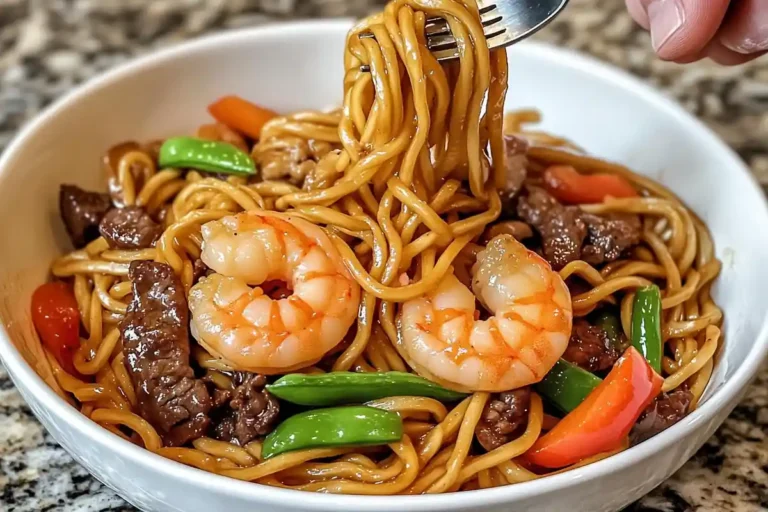
Oh man, let me tell you about the shrimp beef lo mein that changed my takeout game forever. I used to order it every Friday night until I realized—wait, I can make this better at home? And cheaper? With way more shrimp? Game. Changer. This isn’t just some sad imitation—it’s glossy noodles clinging to that perfect sweet-savory sauce, plump shrimp, and beef so tender you’ll swear it came from your favorite hole-in-the-wall spot. After burning through about twelve mediocre versions (oops), I finally cracked the code to restaurant-style lo mein that actually tastes like the real deal. The secret? High heat, that magical sauce combo, and—this is crucial—not overcooking those noodles. Trust me, once you try this version, your delivery app might just collect dust.
Why You’ll Love This Shrimp Beef Lo Mein
Listen, this isn’t just another stir-fry—it’s your new weeknight superhero. Here’s why you’ll be obsessed:
- Faster than delivery: Done in 35 minutes flat, and that’s including chopping time. (Take THAT, traffic-jammed Uber Eats guy.)
- Better than takeout: No skimpy shrimp here—you control the portions, and that sauce? Glossy, clingy perfection.
- One-pan magic: Wok + high heat = crispy-edged beef, juicy shrimp, and veggies that still have some life in them.
- Customizable AF: Swap in chicken, add extra chili flakes—this recipe won’t judge you.
Seriously, it’s the kind of meal that’ll have you licking the plate. No shame.
Shrimp Beef Lo Mein Ingredients
Alright, let’s talk ingredients—because this is where the magic starts. Here’s everything you’ll need to make that glorious takeout-style lo mein happen in your kitchen:

Proteins
- 1 lb large shrimp – peeled, deveined, and patted dry (trust me, dry shrimp sear better!)
- ¾ lb beef sirloin – sliced thin against the grain (this keeps it tender when stir-fried)
Noodles & Veggies
- 12 oz lo mein noodles – or thick egg noodles if that’s what you’ve got
- 1 red bell pepper – sliced into thin strips (for that perfect crunch)
- 1½ cups sugar snap peas – whole or halved if they’re big
- 4 green onions – sliced, whites and greens separated (we’ll use both!)
Aromatics & Sauce
- 3 garlic cloves – minced (more if you’re a garlic fiend like me)
- 1 tsp fresh ginger – grated (don’t skip this—it makes all the difference)
- ¼ cup low-sodium soy sauce – we’ll control the saltiness ourselves
- 2 tbsp oyster sauce – the umami bomb that makes lo mein taste like lo mein
- 1 tbsp hoisin sauce – for that hint of sweetness
- 1 tbsp brown sugar – balances out the saltiness
- 1 tbsp sesame oil – added at the end for that nutty aroma
Extras
- 2 tbsp vegetable oil – for high-heat stir-frying
- Salt and black pepper – to taste (go easy on the salt—the sauces pack plenty)
- 1 tsp cornstarch + 2 tbsp water – our magic sauce thickener
Ingredient Notes & Substitutions
No oyster sauce? Teriyaki sauce can pinch-hit in a pinch (use 1 tbsp less since it’s sweeter). Fresh ginger MIA? ½ tsp ground ginger works, but fresh is way better. For the noodles, spaghetti can sub in if you’re desperate—just undercook it slightly. Veggies flexible? Toss in bok choy or carrots if that’s what’s hanging out in your fridge. The goal? Work with what you’ve got while keeping those key flavors intact.
How to Make Shrimp Beef Lo Mein
Alright, let’s get cooking! This is where the magic happens—that perfect sear on the beef, those juicy shrimp, and noodles that soak up all that glorious sauce. Follow these steps, and you’ll have takeout-quality lo mein in no time.

Step 1: Cook the Noodles
First things first—the noodles. Get your pot of water boiling (salt it like the sea!) and cook those lo mein noodles just until they’re al dente. We’re talking 1 minute less than the package says—they’ll finish cooking later in the wok. Drain them really well (I even give them a quick shake in the colander to get rid of excess water), then toss with a tiny bit of oil to prevent sticking. Soggy noodles are the enemy here!
Step 2: Sear the Beef and Shrimp
Heat that wok or skillet until it’s ripping hot—you should see wisps of smoke. Add 1 tbsp oil and sear the beef in a single layer (no crowding! Do batches if needed). Let it get a good crust—about 1-2 minutes per side—then remove to a plate. Don’t worry if it’s not fully cooked; it’ll finish later. Now, same pan, another quick blast of heat, and in go the shrimp. They’ll cook fast—just 1-2 minutes per side until pink and slightly curled. Out they go to join the beef. Pro tip: Letting them rest separately keeps everything juicy.
Step 3: Stir-Fry Vegetables
Keep that heat high! Toss in the remaining oil, then the bell peppers and snap peas. Stir-fry for just 1 minute—we want crunch, not mush. Add the garlic, ginger, and green onion whites (save the greens for garnish!), and cook for another 30 seconds until fragrant. Your kitchen should smell amazing right now.
Step 4: Combine Everything
Time for the grand finale! Whisk together the soy sauce, oyster sauce, hoisin, brown sugar, sesame oil, and that cornstarch slurry. Pour it into the wok and let it bubble and thicken—about 30 seconds. Now, return the beef and shrimp, add the noodles, and toss like your life depends on it over high heat. Every strand should get glossy and saucy. Fold in the green onion tops, give it one last toss, and boom—you’ve just made better-than-takeout lo mein. Serve it piping hot and watch it disappear!
Tips for Perfect Shrimp Beef Lo Mein
After making this recipe more times than I can count (and yes, burning a batch or two—oops), here are my hard-earned secrets for lo mein that’ll make you feel like a takeout wizard:
- Noodles are everything: Undercook them slightly—they should still have some chew when you drain them. They’ll soak up sauce and finish cooking in the wok.
- Pat those proteins dry: Moisture is the enemy of a good sear. Dry shrimp and beef = better browning = more flavor.
- Work in batches if needed: Crowding the pan steams instead of sears. I’d rather dirty an extra plate than end up with soggy beef.
- High heat is non-negotiable: If your stove has a “power burner,” now’s the time to use it. You want that wok smoking hot for the stir-fry.
- Prep everything beforehand: Once you start cooking, it goes FAST. Have all your ingredients chopped, sauces measured, and noodles drained before firing up the burner.
- Wok hei is worth it: If you have a wok, use it! The shape distributes heat perfectly. No wok? A big cast-iron skillet works too.
- Sauce too thick? Add a splash of hot water or chicken broth. Too thin? Mix another ½ tsp cornstarch with water and stir it in.
- Leftovers hack: The noodles will soak up sauce as they sit. When reheating, sprinkle with a little water and cover loosely—steam brings them back to life.
Follow these tips, and you’ll nail that perfect balance—glossy noodles, crispy-edged beef, and shrimp that still snap when you bite into them. (And yes, chopsticks are mandatory for full authenticity.)
Serving Suggestions for Shrimp Beef Lo Mein
This lo mein is so good it could totally stand alone (I’ve been known to eat it straight from the wok, no shame), but if you want to go full takeout experience, here’s how I love to serve it:
- Steamed dumplings or potstickers – The crispy-chewy contrast is *chef’s kiss*. Frozen ones work great in a pinch—just pan-fry while the lo mein cooks.
- Hot and sour soup or egg drop soup – That classic combo of slurpable noodles and silky soup? Perfection.
- Quick-pickled cucumbers – Thinly sliced cukes with rice vinegar, sugar, and red pepper flakes cut through the richness.
- Jasmine tea or a crisp lager – Tea keeps it authentic, but an ice-cold beer? Also yes.
For garnish, I always keep out extra sliced green onions, sesame seeds, and chili oil (the Lao Gan Ma kind with those crispy bits—you know the one). Let everyone customize their bowl!
Storing and Reheating Shrimp Beef Lo Mein
Look, I’ll be real with you—this lo mein is absolute perfection fresh out of the wok. But if you somehow end up with leftovers (miracles happen), here’s how to keep them tasty:
Storing It Right
Let the lo mein cool just enough so it won’t steam up your container, then pack it in an airtight container—glass works best because it doesn’t hold onto flavors. Tuck it in the fridge within 2 hours of cooking. The noodles will soak up more sauce as they sit, but that’s not necessarily a bad thing—just means more flavor in every bite!
Reheating Like a Pro
- Stovetop magic: My go-to! Toss it in a hot pan with a splash of water or broth. Cover for 1 minute to steam, then uncover and stir-fry until hot. This brings back that glossy texture better than anything.
- Microwave hack (in a pinch): Sprinkle with water, cover loosely with a damp paper towel, and nuke in 30-second bursts, stirring between. Not ideal, but we’ve all been there.
- No dry noodles: However you reheat, always add a little moisture—that cornstarch-thickened sauce loves to tighten up when chilled.
Important note: The shrimp will get slightly firmer when reheated, so if you’re picky about texture, you might want to pick them out and warm them separately. The beef? Still delicious—no worries there.
Honestly though? This stuff is so good fresh that I usually just make the exact amount we’ll eat. (Or “accidentally” cook extra so I can snack on it cold straight from the fridge at midnight. No judgment.)
Shrimp Beef Lo Mein Nutritional Information
Okay, let’s talk numbers – because yes, this lo mein is indulgent, but it’s also packed with real, wholesome ingredients. Here’s the breakdown per serving (and remember, we’re talking generous restaurant-sized portions here!):
| Nutrition | Per Serving |
|---|---|
| Calories | 610 |
| Total Fat | 22g |
| Saturated Fat | 5g |
| Trans Fat | 0g |
| Cholesterol | 180mg |
| Sodium | 1200mg |
| Total Carbohydrates | 65g |
| Dietary Fiber | 5g |
| Sugars | 8g |
| Protein | 44g |
Now, let’s be real – these numbers can vary depending on exactly how much oil you use, whether you go heavy on the hoisin, or if you sneak extra shrimp (no judgment here). The protein count is awesome thanks to all that shrimp and beef, and those snap peas? They’re doing great things for your fiber intake.
Important note: These values are estimates based on standard ingredients. Your exact nutrition will vary depending on brands, substitutions, and whether you lick the wok clean (again… no judgment).
Frequently Asked Questions
You’ve got questions? I’ve got answers—after making this shrimp beef lo mein approximately 8,000 times (okay, maybe 20…), here’s what people ask me most:
Can I Use Frozen Shrimp?
Absolutely! I keep a bag in my freezer for emergency lo mein cravings. Just thaw them overnight in the fridge or under cool running water, then pat them bone-dry with paper towels before cooking. Wet shrimp = sad, steamed shrimp instead of that perfect sear. Pro tip: Sprinkle them with a little cornstarch before stir-frying for extra crispness!
Is There a Gluten-Free Alternative?
Totally! Swap regular soy sauce for tamari (it’s naturally gluten-free and just as flavorful). For the noodles, rice noodles work beautifully—just adjust cooking time since they’re more delicate. Check your oyster sauce too—some brands contain wheat, but gluten-free versions exist (or just skip it and add extra umami with mushrooms).
How Do I Prevent Mushy Noodles?
Oh man, mushy noodles are the WORST. Here’s my foolproof method: undercook them by 1-2 minutes (they should still have a slight bite), rinse under cold water to stop cooking, then toss with a tiny bit of oil. When it’s sauce time, work quickly over high heat—just 1-2 minutes of tossing max. The noodles will soak up flavor without turning to glue. Trust me, your future crispy-noodle-loving self will thank you.
Can I Use Chicken Instead of Beef?
Yes! Swap in thinly sliced chicken thighs (they stay juicier than breasts). Sear them just like the beef—hot and fast—until golden but still slightly pink inside. They’ll finish cooking when you combine everything. Bonus: Chicken pairs amazingly with a splash of fish sauce in the sauce if you want extra depth.
How Do I Make It Spicier?
Oh, we speak the same language! Toss in sliced fresh chili with the veggies, add a spoonful of chili garlic sauce to the sauce mix, or finish with a drizzle of Sichuan chili oil. My personal move? Keeping a jar of pickled Thai chilies in the fridge just for this dish—their vinegary heat cuts through the richness perfectly.
Final Thoughts
Alright, friend—here’s the truth. This shrimp beef lo mein isn’t just some recipe; it’s your ticket to ditching those overpriced takeout containers forever. I mean, think about it: plump shrimp YOU picked, beef sliced exactly how you like it, and that sauce—oh, that glorious sauce—clinging to every noodle just the way it should. No more mystery meat or soggy veggies!
I’m telling you, once you nail this recipe (and you WILL nail it—just keep that wok screaming hot), you’ll start craving your homemade version more than the restaurant stuff. It’s faster than delivery, cheaper than DoorDash, and honestly? Way more satisfying when you realize YOU made this magic happen.
So grab those chopsticks, crank up the heat, and get ready for some seriously slurpable noodles. And when you inevitably fall in love with this recipe? Tag me or leave a comment—I want to hear about your lo mein victories (and see pics of those glossy noodles!). Now go forth and stir-fry like the takeout legend you were always meant to be.
PrintSizzling Shrimp Beef Lo Mein in Just 35 Minutes
Glossy noodles, juicy shrimp, and tender beef make this takeout-style favorite hit hard!
- Prep Time: 15 minutes
- Cook Time: 20 minutes
- Total Time: 35 minutes
- Yield: 4 servings 1x
- Category: Main Course
- Method: Stir Fry
- Cuisine: Asian
- Diet: Low Lactose
Ingredients
- 12 oz lo mein noodles or thick egg noodles
- 1 lb large shrimp, peeled and deveined
- ¾ lb beef sirloin, cut into bite-size pieces
- 1 red bell pepper, sliced
- 1½ cups sugar snap peas
- 4 green onions, sliced
- 3 garlic cloves, minced
- 1 teaspoon fresh ginger, grated
- 2 tablespoons vegetable oil
- Salt and black pepper, to taste
- ¼ cup low-sodium soy sauce
- 2 tablespoons oyster sauce
- 1 tablespoon hoisin sauce
- 1 tablespoon brown sugar
- 1 tablespoon sesame oil
- 1 teaspoon cornstarch
- 2 tablespoons water
Instructions
- Cook the lo mein noodles until just tender, drain well, and set aside.
- Heat 1 tablespoon oil in a large wok or skillet over high heat. Season the beef lightly and sear until deeply browned outside but tender inside, then remove from the pan.
- Add the remaining oil and sear the shrimp until pink, plump, and lightly golden. Toss in the bell pepper, snap peas, garlic, ginger, and green onions, cooking briefly so the vegetables stay crisp.
- Whisk soy sauce, oyster sauce, hoisin, brown sugar, sesame oil, cornstarch, and water together. Pour it into the hot skillet and let it bubble until glossy and slightly thickened. Return the beef.
- Add the noodles and toss over high heat until every strand is deeply coated and glossy. Fold everything together and serve immediately.
Notes
- Keep noodles slightly firm so they soak up the sauce without turning mushy.
- Quickly sear the beef for tender stir-fry results.
- Cook vegetables briefly to maintain crispness.
- Whisk the sauce well to ensure it thickens evenly.
Nutrition
- Serving Size: 1 serving
- Calories: 610
- Sugar: 8g
- Sodium: 1200mg
- Fat: 22g
- Saturated Fat: 5g
- Unsaturated Fat: 12g
- Trans Fat: 0g
- Carbohydrates: 65g
- Fiber: 5g
- Protein: 44g
- Cholesterol: 180mg