
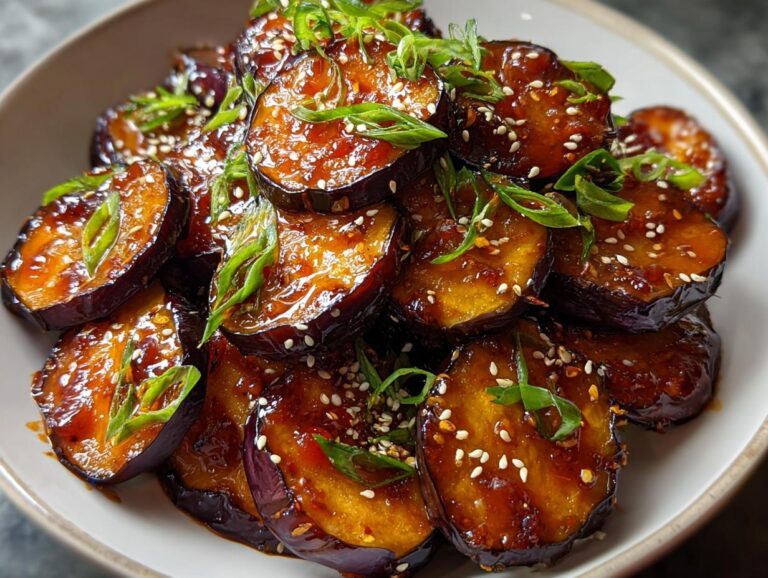
I’ll never forget the first time I tried gochujang eggplant at a tiny Korean joint in LA – that sticky-sweet, spicy glaze clinging to tender eggplant had me hooked instantly! Now it’s my go-to when I need a flavor-packed side dish that comes together in under 30 minutes. The magic happens when caramelized eggplant meets that bold gochujang sauce, creating this perfect balance of heat and sweetness that even veggie skeptics adore. Trust me, once you try this vegan Korean eggplant recipe, you’ll be making it weekly like I do – it’s that good!
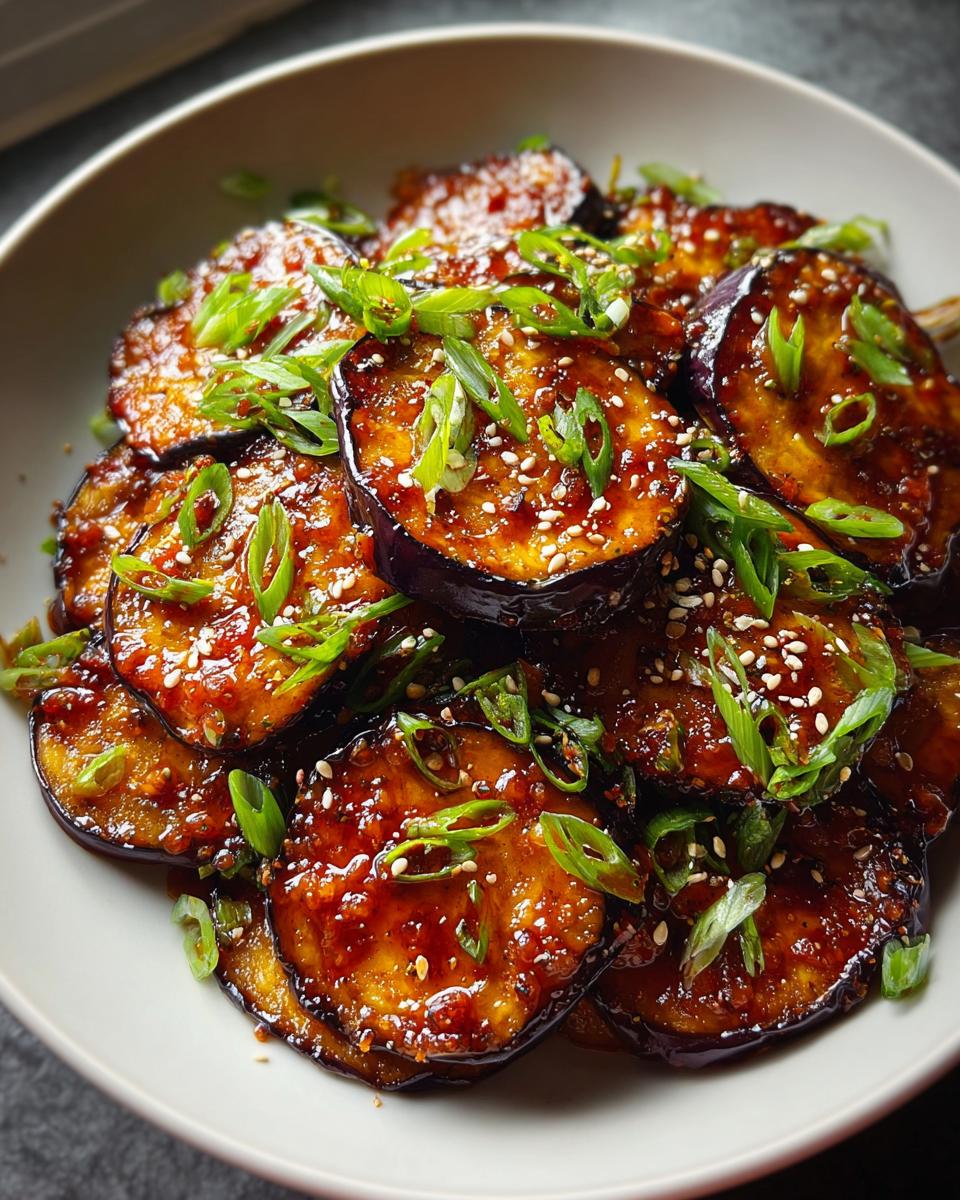
Why You’ll Love This Gochujang Eggplant
This recipe hits all the right notes – here’s why it’s become my weeknight hero:
- Lightning fast – From fridge to table in 30 minutes flat (perfect for those “what’s for dinner?!” panic moments)
- Flavor bomb – That sweet-spicy gochujang glaze will have you licking the plate (no judgment!)
- Vegan magic – Plant-based goodness that satisfies meat-eaters too (my carnivore husband begs for seconds)
- Versatile sidekick – Equally happy next to rice bowls, noodles, or grilled meats
- Leftover dream – Tastes even better the next day if it lasts that long (spoiler: it won’t)
Ingredients for Gochujang Eggplant
Gathering the right ingredients is half the battle with this dish – and trust me, every single one plays a crucial role in creating that addictive sweet-spicy harmony. Here’s exactly what you’ll need (no vague “some” or “a little” here – I’ve tested these measurements dozens of times!):
- 2 medium eggplants, sliced into 1/2-inch rounds (look for firm, shiny ones without soft spots)
- 2 tbsp gochujang (Korean red chili paste – the star ingredient! Find it in Asian markets or the international aisle)
- 1 tbsp soy sauce (I use regular, but low-sodium works too if you’re watching salt)
- 1 tbsp rice vinegar (that subtle tang balances the sweetness perfectly)
- 1 tbsp honey or maple syrup (for vegans – both work beautifully to mellow the heat)
- 2 garlic cloves, minced (fresh is best – no jarred stuff for this flavor bomb!)
- 1 tbsp sesame oil (toasted kind – it makes ALL the difference in aroma)
- 2 tsp neutral oil like vegetable or grapeseed (for frying – olive oil smokes too easily)
- 1 tbsp sesame seeds (for that final crunchy garnish)
- 1 tbsp chopped green onions or chives (the bright pop of color and freshness)
Pro tip from my many kitchen experiments: measure your gochujang with a light hand at first if you’re spice-shy – you can always add more glaze later! And don’t skip salting the eggplant – it’s the secret to that perfect melt-in-your-mouth texture.
How to Make Gochujang Eggplant
Okay, let’s get cooking! This recipe comes together in three simple phases – prep the eggplant, whip up that killer glaze, then bring it all together in the pan. I’ve burned enough eggplants in my day to know exactly where things can go wrong, so follow these steps closely for perfect results every time.
Prepping the Eggplant
First things first – we gotta treat those eggplant slices right! Lay them out on a baking sheet or large plate in a single layer (overlapping = soggy eggplant sadness). Sprinkle both sides generously with salt – about 1/2 teaspoon total – and let them sit for 15 minutes. You’ll see beads of moisture form on the surface – that’s exactly what we want!
After their salty spa treatment, pat the slices dry with paper towels. This step is CRUCIAL – wet eggplant won’t caramelize properly. I like to press gently between towels to really get that excess moisture out. Now they’re ready to soak up all that glorious glaze!
Making the Gochujang Glaze
While the eggplant rests, let’s make that addictive sauce. Grab a small bowl and whisk together:
- 2 tbsp gochujang (start with 1 tbsp if you’re nervous about heat)
- 1 tbsp soy sauce
- 1 tbsp rice vinegar
- 1 tbsp honey or maple syrup
- 2 minced garlic cloves
- 1 tbsp toasted sesame oil
Whisk until it’s completely smooth – no lumps allowed! Taste and adjust – want more heat? Add another 1/2 tbsp gochujang. Too spicy? A bit more honey balances it out. This glaze keeps well in the fridge for weeks, so feel free to double it for future meals (trust me, you’ll want to put it on everything).
Cooking the Eggplant
Heat 2 tsp neutral oil in a large skillet over medium-high heat until shimmering. Here’s my golden rule: don’t overcrowd the pan! Cook eggplant slices in batches (about 4-5 at a time) for 3-4 minutes per side until they develop gorgeous golden-brown spots and turn tender when pierced with a fork.
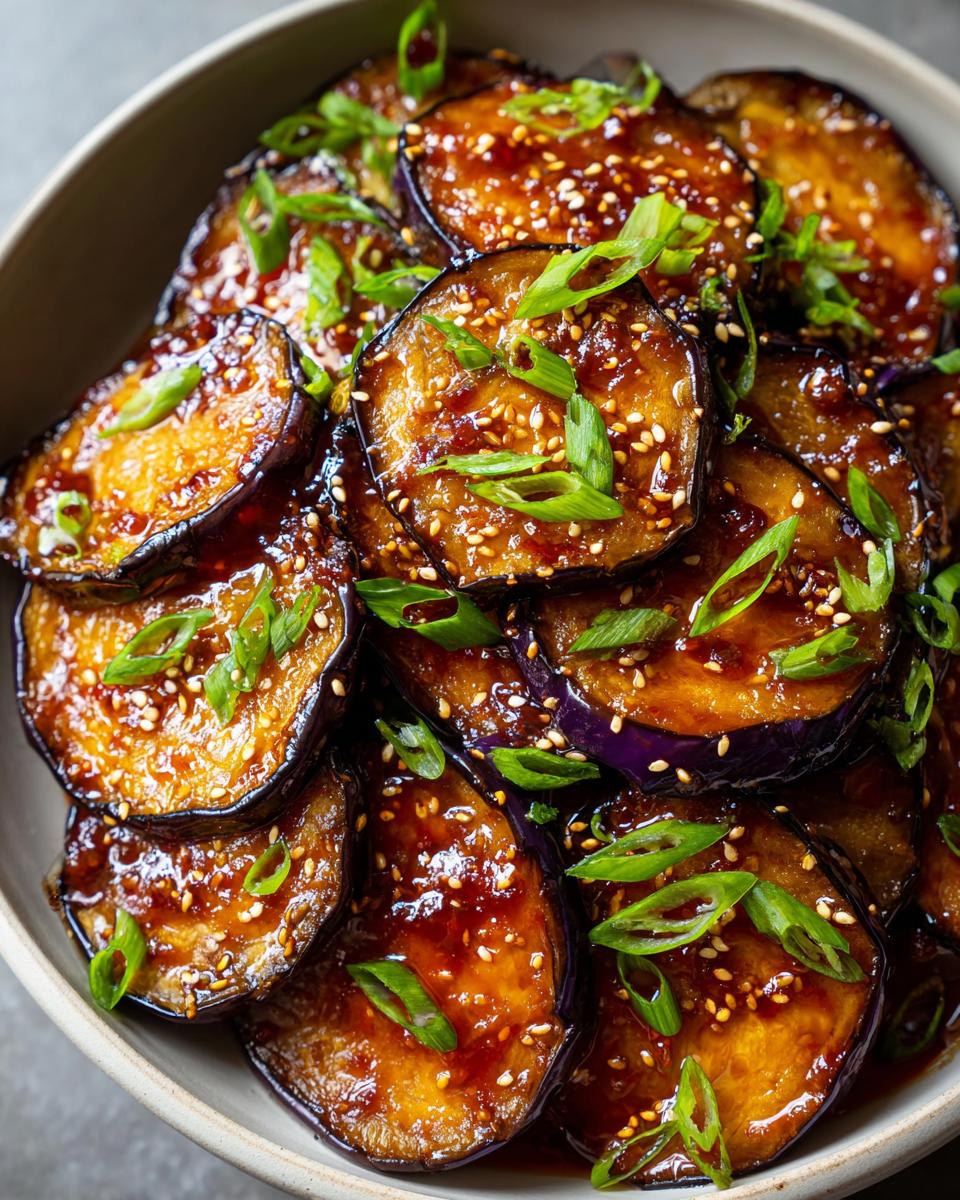
Reduce heat to medium-low and return all cooked eggplant to the pan. Pour the glaze over top, gently tossing to coat each slice. Let it bubble away for 2-3 minutes until the sauce thickens into a sticky, glossy coating that clings to the eggplant. That’s when you’ll get those irresistible caramelized edges!
Remove from heat and sprinkle with sesame seeds and green onions. Serve immediately while it’s piping hot – the contrast between the crispy edges and silky interior is absolute magic!
Tips for Perfect Gochujang Eggplant
After making this dish more times than I can count (and yes, burning a few batches along the way), I’ve picked up some game-changing tricks that’ll make your gochujang eggplant shine:
- Spice control is key – Start with 1 tbsp gochujang if you’re heat-sensitive, then add more after tasting the glaze. Remember – you can always add heat, but you can’t take it away!
- Give them space to breathe – Crowding the pan leads to steamed, soggy eggplant. Cook in batches (I know it’s tempting to rush) for that perfect caramelized crust.
- Don’t skimp on salting time – Those 15 minutes of rest? Non-negotiable. It draws out bitterness and makes the texture dreamy.
- Medium-high is your friend – Too low and the eggplant turns mushy; too high and it burns before cooking through. Watch for that golden-brown sweet spot.
- The glaze thickens fast – Stay by the stove during those last 2 minutes! The sauce goes from perfect to burnt in what feels like seconds.
- Sesame oil matters – Regular oil just won’t give you that authentic nutty aroma. Splurge on the toasted stuff – a little goes a long way!
My biggest lesson? Patience pays off with eggplant. Rush the steps, and you’ll miss out on that magical balance of crispy edges and melt-in-your-mouth centers that makes this dish so addictive!
Serving Suggestions for Gochujang Eggplant
This sticky, spicy eggplant plays well with so many dishes! Here are my favorite ways to serve it – trust me, I’ve tried them all:
- Steamed jasmine rice – The classic pairing that soaks up every last drop of that addictive glaze (I always make extra rice for this reason!)
- Cold soba noodles – Toss them right in with the eggplant for an instant noodle bowl that’s packed with flavor
- Korean BBQ feast – Serves as the perfect veggie side alongside grilled meats like bulgogi or galbi
- Bibimbap bowls – Top warm rice with eggplant, sautéed spinach, kimchi, and a fried egg for the ultimate meal
- As an appetizer – Serve small portions with toothpicks alongside chilled Korean beers or soju cocktails
My personal favorite? Piled high over a bowl of steaming rice with a soft-boiled egg on top – the yolk makes the most luscious sauce when it mixes with the spicy glaze. Absolute perfection!
Storing and Reheating Gochujang Eggplant
Listen, I get it – you’ll probably devour this eggplant straight from the pan (I certainly have!). But if by some miracle you have leftovers, here’s how to keep that spicy-sweet magic alive:
First, let the eggplant cool completely before packing it up – tossing steaming hot food straight into a container creates condensation that turns everything mushy. I use an airtight container (those glass snap-lid ones work best) and it keeps beautifully in the fridge for up to 2 days. Any longer and the texture starts to suffer – though in my house, it never lasts that long anyway!
When you’re ready to resurrect your leftovers, skip the microwave if you can. That high heat zaps the texture and makes the glaze separate. Instead, I reheat mine in a skillet over medium-low with a tiny splash of water. Cover it for a minute to steam gently, then uncover and let the glaze thicken back up. Adds just 3-4 minutes to your prep time but makes all the difference!
Pro tip from my many fridge raids: The flavors actually deepen overnight, so sometimes I intentionally make extra for next-day lunches. Just give it a quick stir-fry with some fresh veggies and rice – instant upgrade to your meal prep game!
Gochujang Eggplant Variations
One of my favorite things about this recipe is how easily it adapts to whatever I’ve got in my fridge – here are some delicious twists I’ve tried when the mood strikes (or when I’m trying to clean out the produce drawer!):
- Tofu boost – Add cubed firm tofu during the last few minutes of cooking for extra protein (pat it dry first so it gets crispy!)
- Maple magic – Swap honey for maple syrup if you’re keeping it strictly vegan – the deeper flavor actually works amazingly well
- Veggie party – Toss in sliced bell peppers or zucchini with the eggplant for more texture and color
- Peanut punch – Stir in 1 tbsp peanut butter to the glaze for a rich, nutty dimension that’s absolutely addictive
- Pineapple surprise – A handful of fresh pineapple chunks adds sweet-tart contrast that cuts through the spice
- Mushroom madness – King oyster mushrooms sliced lengthwise make a fantastic eggplant alternative with similar meaty texture
My most recent experiment? Adding a splash of orange juice to the glaze – the citrus brightens everything up beautifully. The beauty of this dish is how forgiving it is – once you’ve mastered the basic version, don’t be afraid to play around and make it your own!
Gochujang Eggplant FAQs
Since sharing this recipe with friends, I’ve gotten the same burning questions over and over – so let me save you the trouble of texting me mid-cooking panic with these handy answers!
Can I bake the eggplant instead of pan-frying?
Absolutely! Brush salted, dried eggplant slices with oil and bake at 425°F for 20 minutes (flip halfway) until golden. Then toss with warmed glaze – just know you’ll miss some of that glorious caramelization from the skillet.
What if I can’t find gochujang?
While nothing quite matches its fermented depth, mix 1 tbsp sriracha + 1/2 tsp smoked paprika + 1/2 tsp sugar as a quick fix. But seriously – order real gochujang online if your store doesn’t carry it. Life-changing!
How spicy is this really?
With 2 tbsp gochujang, it’s got a solid kick – think medium salsa heat. For milder palates (or kids), start with 1 tbsp paste and add more to taste after mixing the glaze.
Can I prep components ahead?
You bet! Salt and dry the eggplant up to 2 hours before cooking (store layered with paper towels in the fridge). The glaze keeps for 2 weeks refrigerated – just whisk before using.
Why does my eggplant turn out mushy?
Three likely culprits: didn’t salt/dry properly, overcrowded the pan, or cooked at too low heat. Eggplant needs space and high-ish heat to caramelize rather than steam!
Nutritional Information
Now, I’m no nutritionist (just a home cook who loves good food!), but here’s the general nutritional scoop on this gochujang eggplant – keep in mind these are rough estimates since ingredients vary by brand and your exact portions:
This dish packs a nice nutritional punch with eggplant’s fiber and antioxidants, plus the gut-friendly benefits of fermented gochujang. The glaze adds some natural sugars from honey, while sesame oil brings those good-for-you unsaturated fats. It’s naturally vegan and gluten-free if you use tamari instead of soy sauce!
Remember – cooking is about joy, not numbers! I focus on using fresh, quality ingredients and listening to my body’s cravings. That said, if you’re tracking macros closely, I’d recommend plugging your exact brands into a nutrition calculator since my tablespoon of local honey might differ from yours calorie-wise.
The bottom line? It’s veggies with a flavor-packed sauce – that’s always a win in my book! Now go enjoy that eggplant guilt-free. For more delicious recipes, check out our Pinterest page.
Print30-Minute Gochujang Eggplant Will Blow Your Mind
A bold and flavorful vegan side dish featuring pan-seared eggplant glazed with a sweet and spicy gochujang sauce.
- Prep Time: 10 minutes
- Cook Time: 20 minutes
- Total Time: 30 minutes
- Yield: 4 servings 1x
- Category: Side Dish
- Method: Pan-frying
- Cuisine: Korean
- Diet: Vegan
Ingredients
- 2 medium eggplants, sliced into 1/2-inch rounds
- 2 tbsp gochujang (Korean red chili paste)
- 1 tbsp soy sauce
- 1 tbsp rice vinegar
- 1 tbsp honey or maple syrup
- 2 garlic cloves, minced
- 1 tbsp sesame oil
- 2 tsp neutral oil (for pan-frying)
- 1 tbsp sesame seeds
- 1 tbsp chopped green onions or chives
Instructions
- Prep and salt the eggplant by sprinkling sliced eggplant with salt and letting it rest for 15 minutes. Pat dry to remove excess moisture.
- Make the glaze by whisking gochujang, soy sauce, vinegar, honey, garlic, and sesame oil in a small bowl.
- Sear the eggplant by heating neutral oil in a skillet over medium-high heat. Cook eggplant slices in batches until golden brown and tender.
- Glaze and simmer by reducing heat, adding the glaze over the eggplants, and cooking for 2–3 minutes until the sauce thickens.
- Garnish with sesame seeds and chopped green onions before serving.
Notes
- Salting the eggplant helps remove excess moisture for better texture.
- Adjust the amount of gochujang for more or less spice.
- Store leftovers in an airtight container for up to 2 days.
Nutrition
- Serving Size: 1 serving
- Calories: 170
- Sugar: 8g
- Sodium: 320mg
- Fat: 7g
- Saturated Fat: 1g
- Unsaturated Fat: 5g
- Trans Fat: 0g
- Carbohydrates: 24g
- Fiber: 6g
- Protein: 3g
- Cholesterol: 0mg